Why We Start With Prewriting Lines and What That Looks Like at Home and in the Classroom

When I was a special education teacher, my sons were in my classroom with me.

During that time, I was told by our school occupational therapist that writing wasn’t considered functional for autistic children, and that keyboarding skills should take priority instead.

What made that guidance especially hard to reconcile was that, at the time, two of my children didn’t yet know their letters.

I remember sitting with that disconnect. Being encouraged to move ahead to a skill that assumed literacy foundations were already in place, while watching my own children still working to understand shapes, symbols, and how their hands moved across a page.

That experience stayed with me. It shaped how I think about writing, readiness, and what meaningful instruction really looks like.

If writing has felt hard lately, you’re not alone.

Many families and educators come to handwriting with questions. Maybe a child avoids writing activities. Maybe letter tracing feels frustrating. Maybe you’re wondering whether a learner is ready, or if expectations are being pushed too quickly.

If any of that sounds familiar, take a breath.
You’re not doing anything wrong.

For many children, especially autistic learners, handwriting doesn’t begin with letters. It begins with learning how the hand moves, where lines start and stop, and how the body organizes movement on a page.

That understanding is what guides how we design our resources at Autism Homeschooling, for use both at home and in the classroom.

When “Prewriting” Becomes Too Much, Too Soon

As I continued teaching and learning alongside my own children, I started to notice something else.

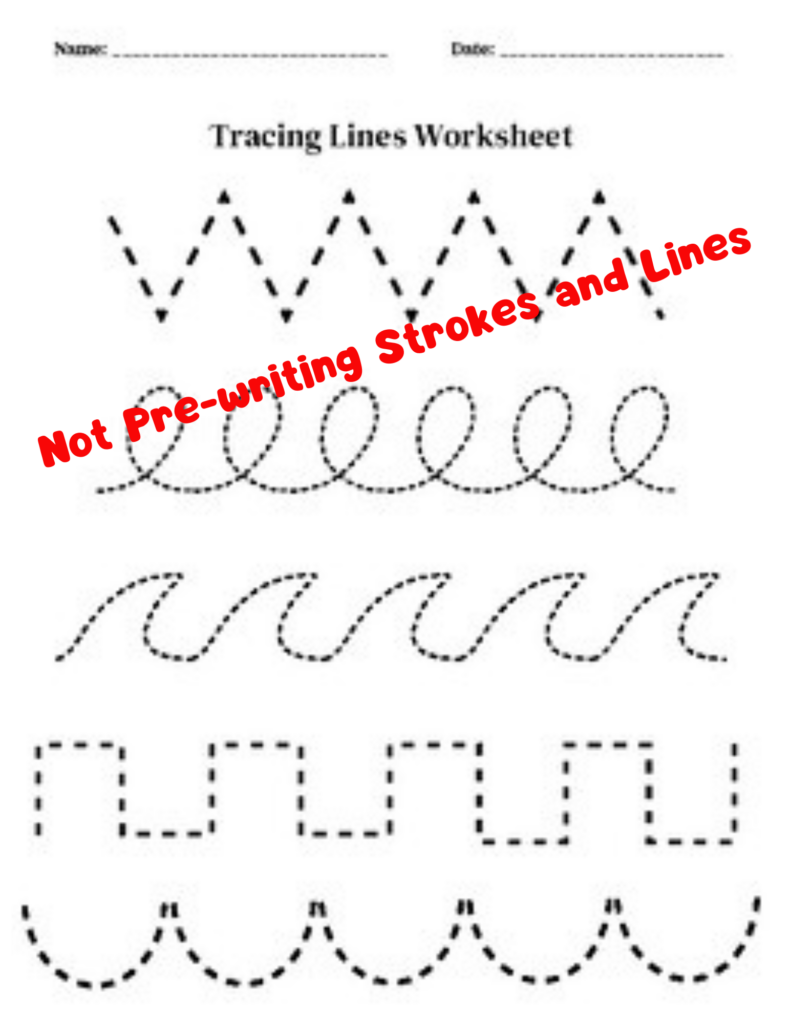
Many materials labeled as prewriting were already asking children to do very complex things.

Pages were filled with loops, zigzags, winding paths, and intricate patterns that required sustained attention, advanced motor planning, and visual tracking across the entire page.

For some learners, those activities can be appropriate later on.
But for many autistic children and early writers, they introduce too many demands at once.

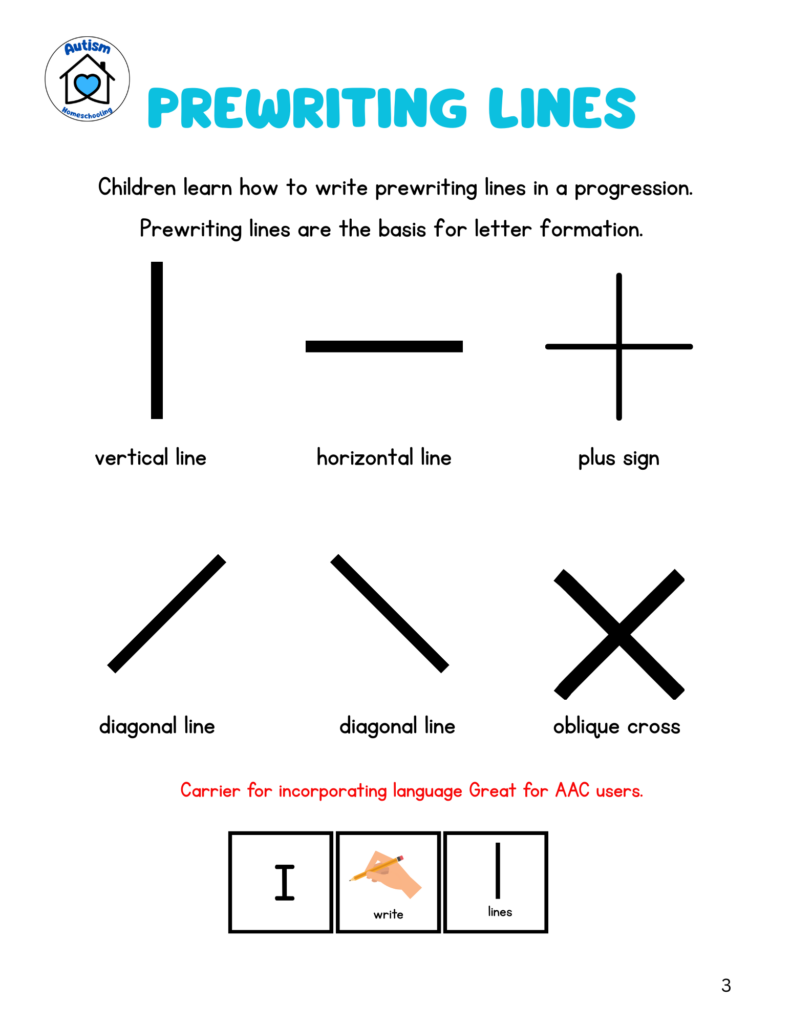
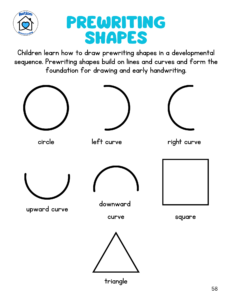
True prewriting focuses on simple, repeatable movements:

  • straight lines

  • basic curves

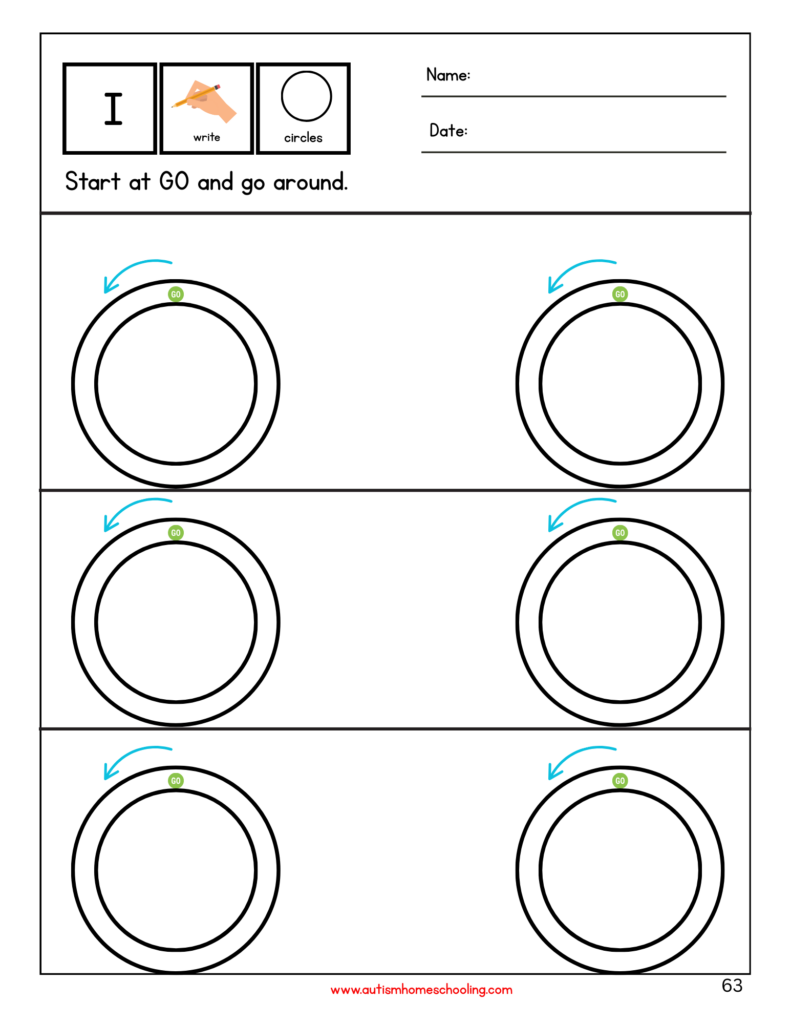
  • circles

  • clear start and stop points

These are the building blocks of handwriting. When those foundations aren’t secure yet, adding decorative paths or complex patterns can feel less like preparation and more like pressure.

That’s not a child being “unready.”
That’s the task asking for skills that are still developing.

What We Mean by Prewriting

When we talk about prewriting, we’re not talking about fancy pages or keeping a pencil busy.

We’re talking about helping a child:

  • understand how a line begins and ends

  • feel how a curve moves through space

  • practice one movement at a time

  • build confidence through repetition

This is why our prewriting resources intentionally avoid loops, zigzags, and visually busy designs in the early stages.

Instead, we focus on:

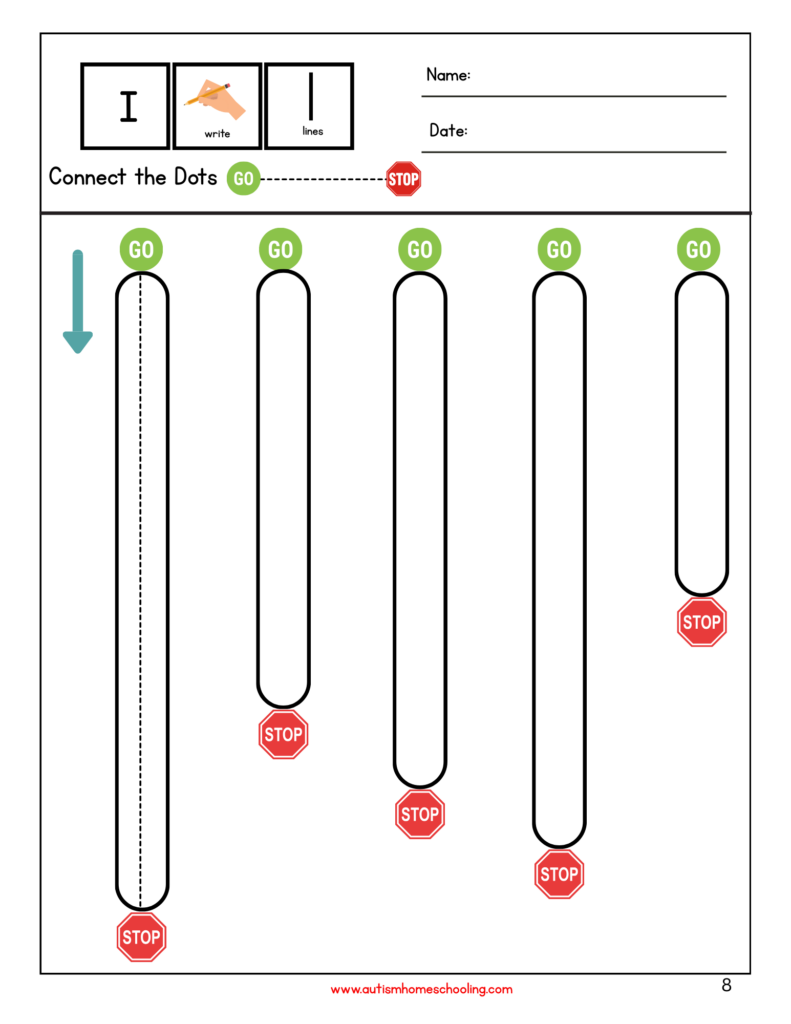
  • one stroke per page

  • predictable layouts

  • consistent language and cues

  • gradual progression from supported practice to independence

The goal is not to make pages look impressive.
The goal is to make learning feel possible.

How We Scaffold Prewriting Skills Over Time

Once children are comfortable with simple strokes, the next step isn’t rushing ahead. It’s gently building support in a way that helps skills stick.

In our prewriting resources, skills are introduced in a clear progression. Each stage serves a purpose, and none of them are meant to be rushed.

First: Clear Boundaries

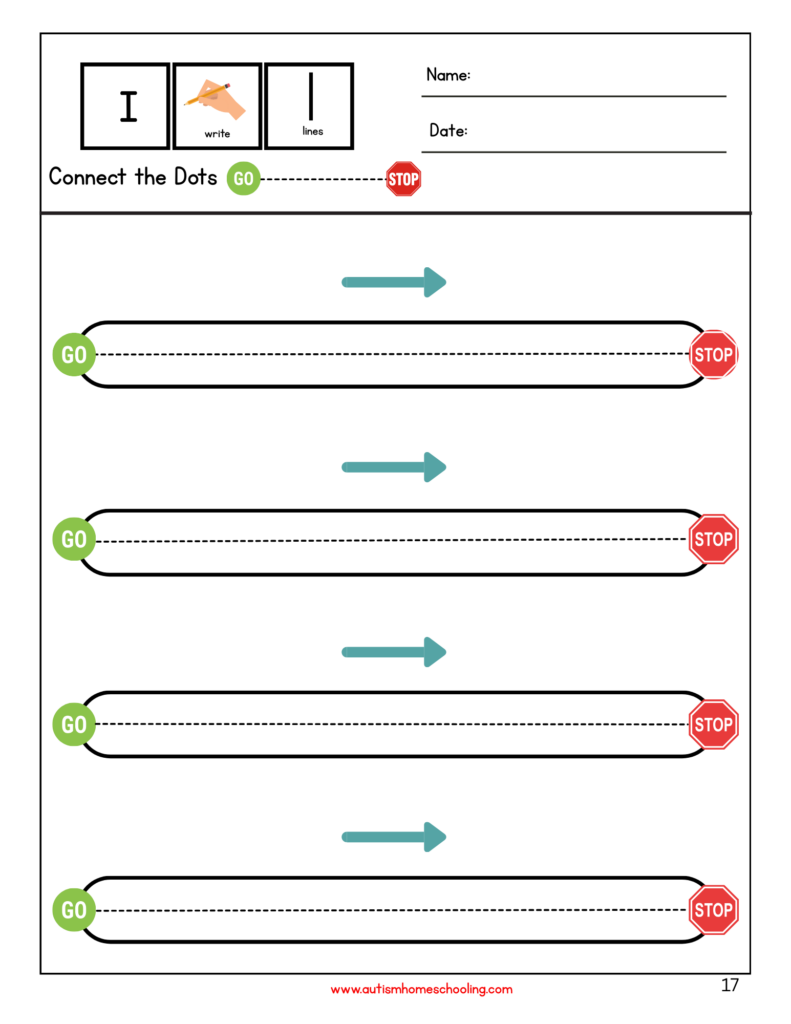
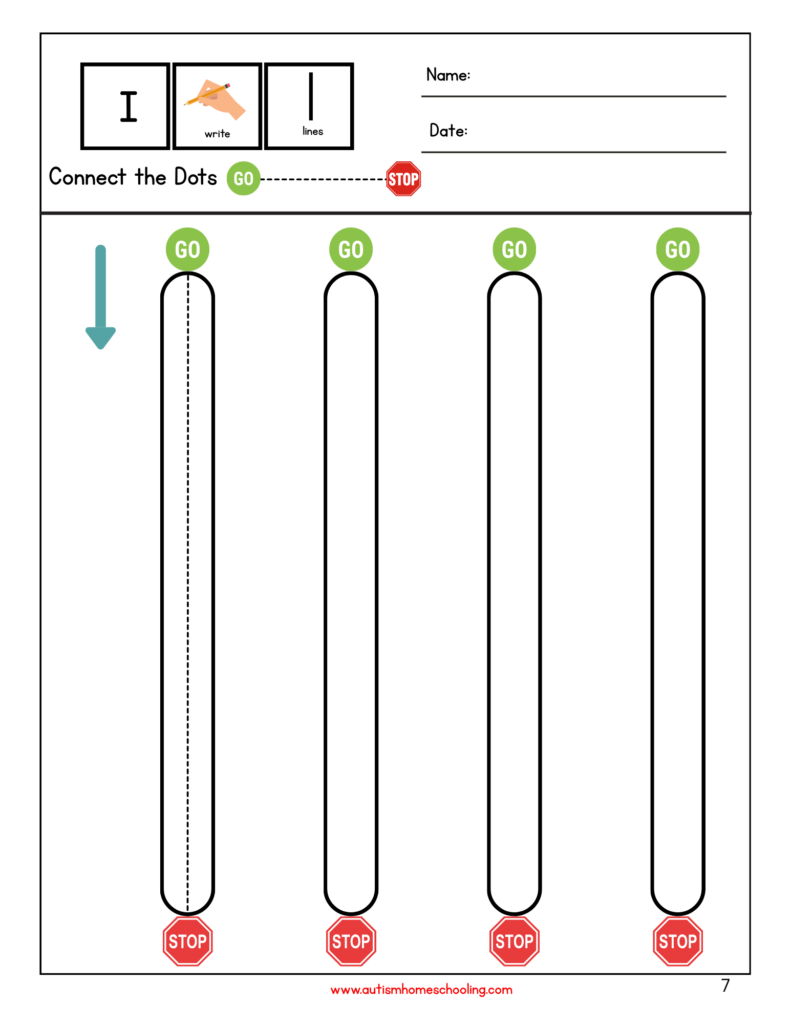
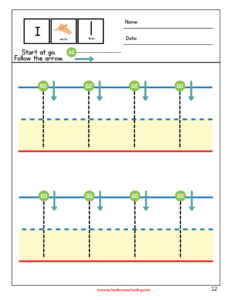
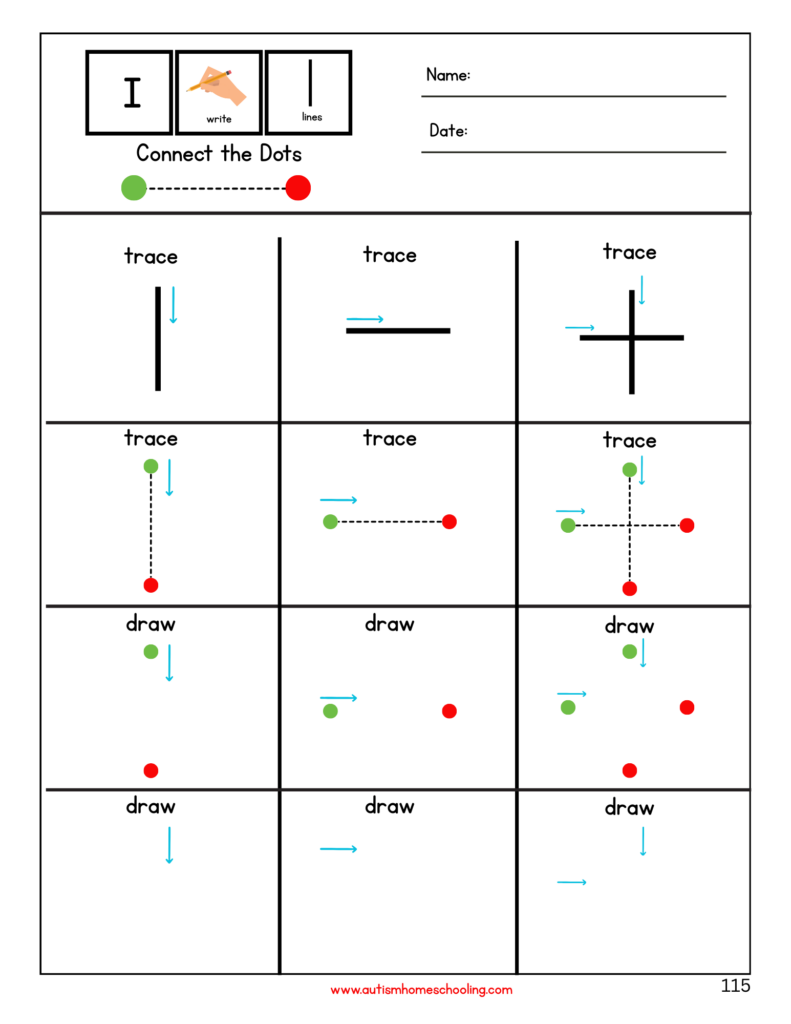
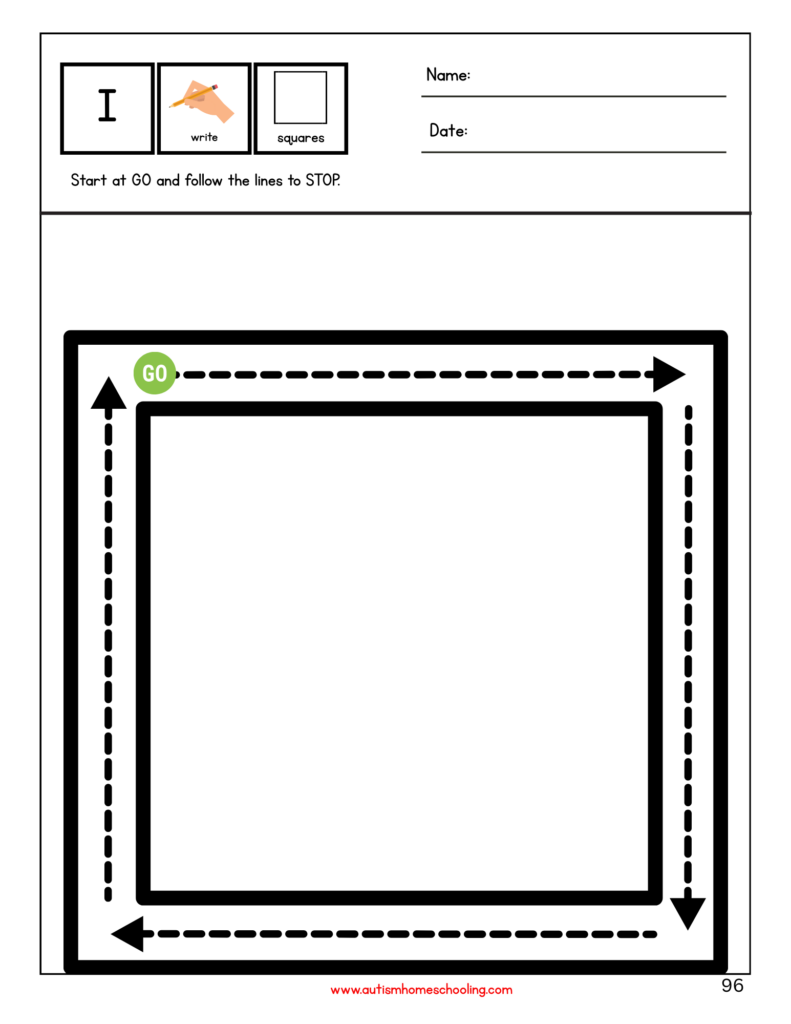
Early pages include bold paths, dots, or visual borders. These boundaries help children see where the line starts, where it ends, and how much space the movement should take.

For many learners, this visual structure reduces guesswork and builds confidence right away.

Next: Motor Planning Supports

As children become more familiar with the movement, arrows and start points guide the hand through the stroke. This helps the brain plan the action before the hand carries it out.

You may notice smoother movements and less hesitation as this skill develops.

Finally: Independent Practice

Only after repeated, supported practice do we begin to remove visual cues. Independent pages allow children to try the movement on their own, using the motor memory they’ve built.

If independence takes time, that’s not a setback. It’s part of learning.
A Gentle Reminder for Home and Classroom Use

Progress in prewriting doesn’t always look like perfect lines.

Sometimes it looks like:

  • staying at the table a little longer

  • trying again after stopping

  • tolerating a pencil without stress

  • finishing one stroke and feeling proud

Those moments matter.

Short, consistent practice builds stronger foundations than long sessions or rushed expectations. Whether you’re working at home or in the classroom, a few focused minutes a day is enough.

Where Prewriting Leads

Prewriting isn’t about delaying learning.
It’s about building confidence that lasts.

When children are given time to understand how their hands move, where lines begin and end, and how to repeat simple movements successfully, writing stops feeling overwhelming. Letters, numbers, and written tasks become more approachable because the foundation is already there.

This is true whether you’re supporting a child at home or in the classroom.

Starting with prewriting allows learning to grow in a way that feels steady, respectful, and achievable.

That belief is what shaped the Prewriting Strokes & Lines Workbook. It was created to support early writers with clear structure, low demand, and intentional progression, so children can build skills without pressure.

However you support writing in your setting, know this:
Foundations matter. And you’re allowed to take your time.

This approach is what shaped the Prewriting Strokes & Lines Workbook. It was created to support early writers with clear structure, low demand, and gradual progression from supported practice to independence.

https://www.teacherspayteachers.com/Product/Autism-Prewriting-Workbook-Strokes-Lines-with-Visual-Cues-14713224

Share this :
Picture of Kristie Owens
Kristie Owens

Thank you! Please share!

One Response

  1. Thank you for sharing all of this. Your journey has led you to being able to help others on a wider scale. Thank you for making the efforts to help not only your sons but so many other learners as well.