What reading is really made of and how to build it step by step
If you’re homeschooling a child with autism, you’ve probably asked some version of this question:
“They know their letters… so why isn’t reading clicking yet?”
That question doesn’t mean something is wrong. It usually means one thing:
the map is missing.
Reading is not one skill. It’s a system of many small skills that develop at different speeds, and autistic learners often build those skills unevenly. That’s not a flaw. It’s information.
This post walks through a clear, skill-by-skill roadmap to reading, designed specifically with autism homeschooling in mind. No rushing. No skipping steps. No pretending all kids learn the same way.
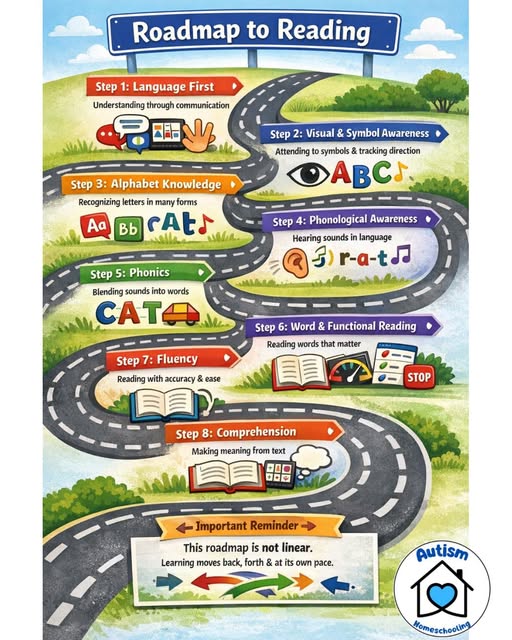
Step 1: Language Comes First (Before Letters Ever Matter)
Before reading can happen, language has to exist in some form.
That can look like:
Spoken language
AAC use
Gestures, signs, or picture communication
Consistent understanding of words, routines, and meaning
Reading is built on understanding that symbols represent meaning. That understanding can develop through AAC, visuals, modeling, and real communication long before a child ever touches print.
If your child uses AAC, that is not separate from reading. It is part of the foundation.
Lorem ipsum dolor sit amet, consectetur adipiscing elit. Ut elit tellus, luctus nec ullamcorper mattis, pulvinar dapibus leo.
Step 2: Visual Attention & Symbol Awareness
Many autistic learners need explicit support with visual processing, not because they can’t see, but because the brain may prioritize details differently.
Key skills here include:
-
Attending to symbols on a page
-
Tracking left to right
-
Noticing differences between shapes
-
Recognizing that symbols stay the same even when colors or fonts change
This is where letters as shapes matter before letters as sounds.
A child who can tell the difference between:
-
O and C
-
b and d
-
E and F
is building critical pre-reading skills, even if they aren’t “reading” yet.
Step 3: Alphabet Knowledge (Not Just Memorization)
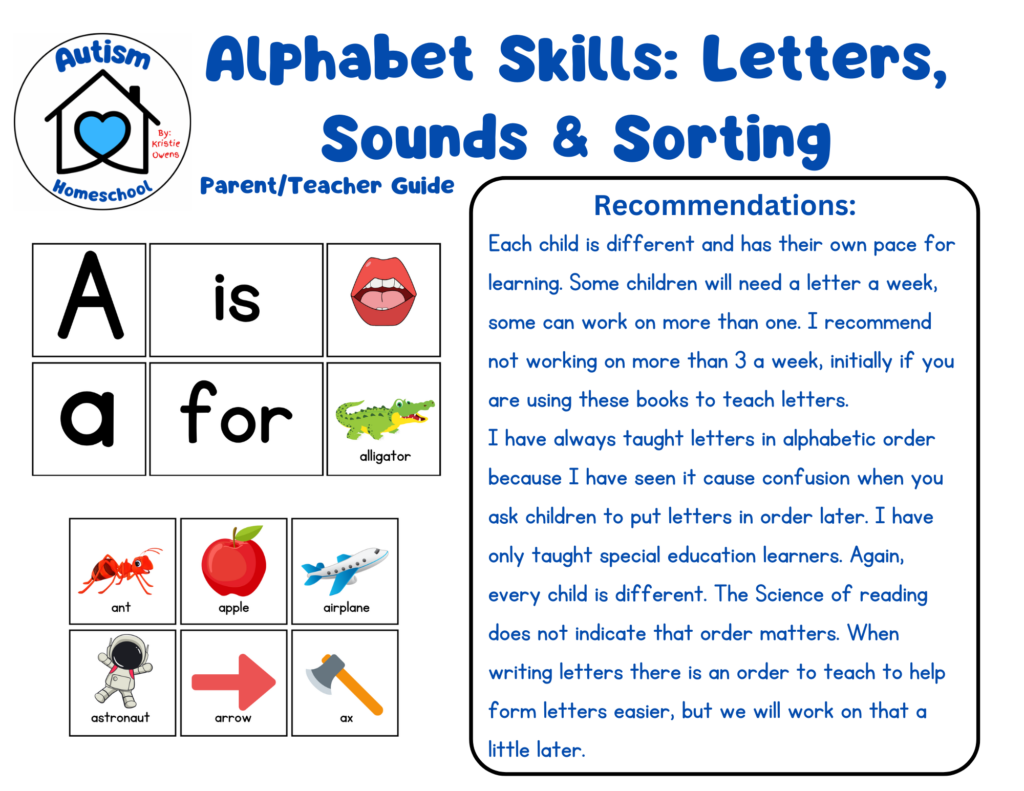
Alphabet knowledge has layers. Knowing the ABC song is only the surface.
A strong alphabet foundation includes:
Recognizing uppercase letters
Recognizing lowercase letters
Matching uppercase to lowercase
Identifying letters in different fonts and contexts
Connecting letters to sounds when ready
This is where slow and intentional exposure matters more than speed.
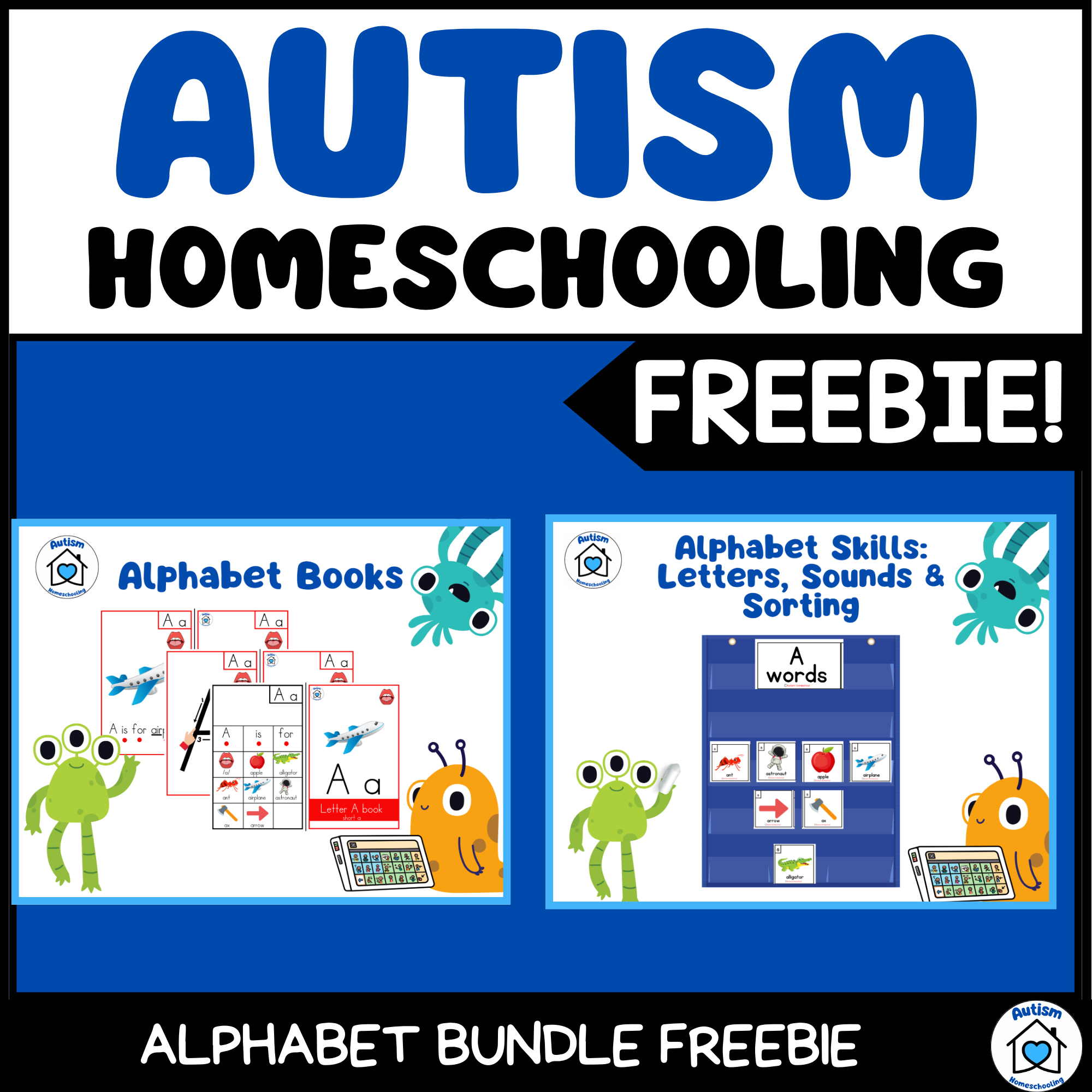
Get the Alphabet Bundle Freebie
A developmentally aligned sample that builds letter recognition, sounds, and early alphabet understanding without rushing handwriting.
Thank you!
You have successfully joined our subscriber list.
Step 4: Phonological Awareness (Hearing Language)
Phonological awareness is about hearing language, not reading it yet.
Skills include:
Hearing beginning sounds
Hearing rhymes
Identifying sounds in spoken words
Blending sounds orally
Many autistic children can decode visually before these skills are fully solid, but gaps here often show up later as frustration or inconsistency.
If reading feels “on one day, gone the next,” this layer is often involved.
Step 5: Phonics (Matching Sounds to Symbols)
Phonics is where things start to look like reading, but it still needs to be systematic and flexible.
Key components:
Letter-sound correspondence
Blending sounds into words
Segmenting words into sounds
Practicing with controlled, predictable word patterns
This step works best when:
Visual supports are present
Words are meaningful to the child
Motor demands are kept separate from decoding
Reading should not fall apart because handwriting is hard.
Step 6: Word Recognition & Functional Reading
Reading doesn’t only mean books.
Functional reading matters:
Names
Signs
Labels
Schedules
AAC buttons
Preferred words
Some autistic learners develop a strong sight-word vocabulary early. Others rely more on decoding. Neither path is wrong.
What matters is meaning and access.
Step 7: Fluency (When Reading Feels Easier)
Fluency is not about speed. It’s about:
Accuracy
Ease
Reduced cognitive load
When decoding takes less effort, comprehension has space to grow.
This step takes time. For many autistic learners, it develops slowly and unevenly. That’s normal.
Step 8: Comprehension (Built Gradually, Not Assumed)
Comprehension is not automatic.
It includes:
Understanding vocabulary
Connecting ideas
Making meaning from text
Relating text to lived experience
Visual supports, discussion, AAC modeling, and repeated exposure all support comprehension. Silent reading is not a prerequisite.
The Most Important Thing to Remember
This roadmap is not linear.
Your child may:
Decode before speaking much
Understand stories without reading independently
Recognize words visually but struggle with sounds
Regress temporarily when demands increase
That doesn’t mean the roadmap is broken. It means the learner is human.
Final Thoughts for Autism Homeschooling Parents
You do not need:
One perfect curriculum
To rush ahead because of grade levels
To “push through” confusion
You need:
A clear map
Permission to slow down
Skills broken into honest parts
Reading is not a race. It’s a relationship with language.
And relationships grow best when they’re built with patience, structure, and trust 💙